The First Snow Without the Search: Where Are the Children's Skis?

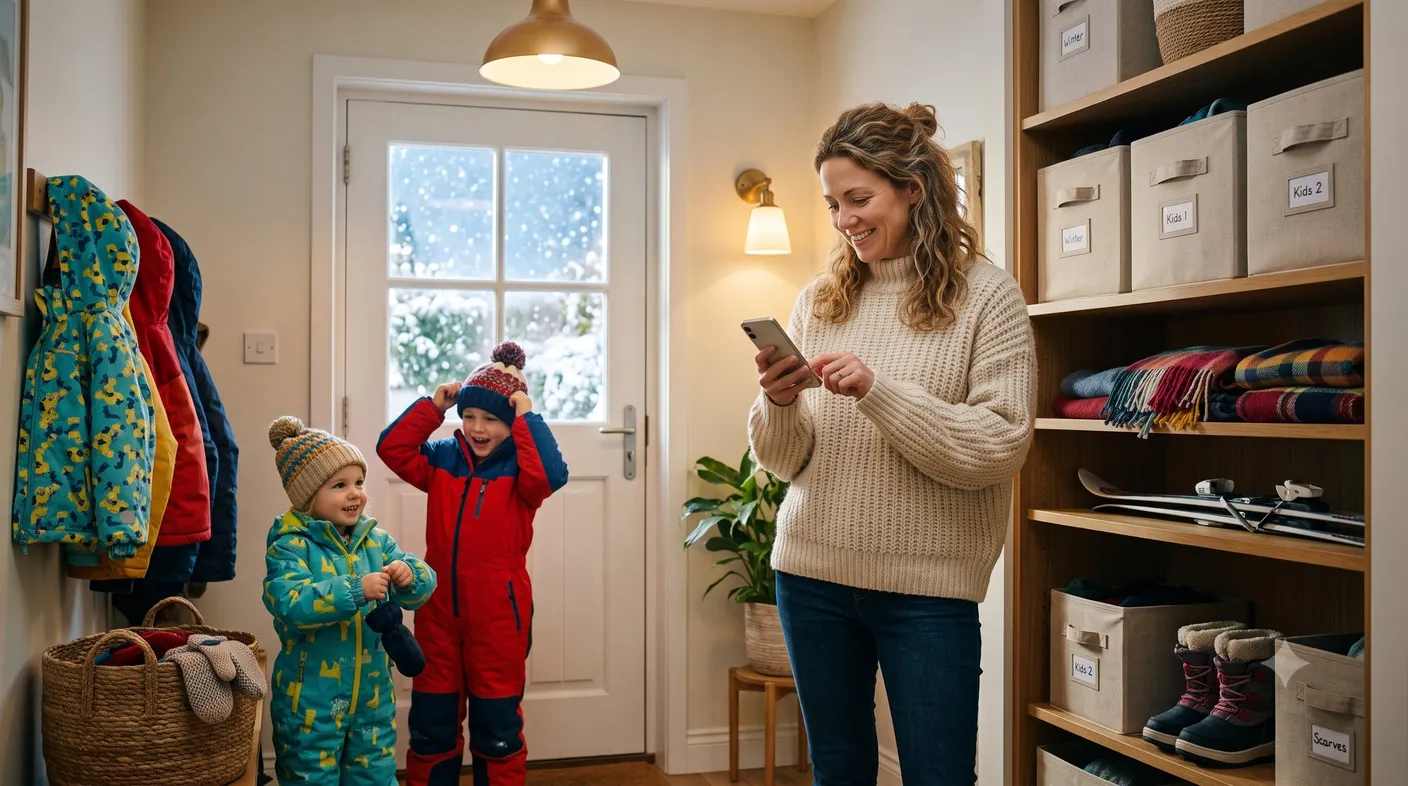
The first snow began during the night.
Cold rain had rattled against the windows the evening before, but by morning the town had become unusually quiet and bright. Rooftops had turned white, trees wore soft caps of snow, and large flakes continued to drift through the air.
Sophie noticed the snow when she went to wake the children.
“Look outside!” she said, pulling back the curtains.
Their sleepiness vanished instantly.
Ten-year-old Lukas was already imagining an afternoon of skiing after school. His younger sister Nora demanded her sled, warm boots and the mittens with reindeer — the very ones she had worn the previous winter.
Within minutes, the peaceful winter morning had turned into a search operation.
The children’s skis were definitely somewhere in the house. In spring, Sophie had cleaned off the snow and dirt herself, dried them and put them away until the next season.
The ski boots could not have disappeared either. Nor could Nora’s warm boots, the reindeer mittens, two woollen scarves and the waterproof trousers for snowy walks.
There was only one problem: Sophie had no idea where she had put any of them.
Things stored in “a safe place”
Sophie began in the hallway.
She opened the lower wardrobe compartments, pulled out a box of summer shoes and checked the top shelf. She found old magazines, a blanket and a bag of Christmas decorations, but no ski boots and no winter boots.
The storage cupboard came next.
One shelf held boxes labelled “Toys,” “Country House” and “Miscellaneous.” The last one looked especially promising, but it contained chargers, an old night-light and several pieces from a children’s construction set.
“Mum, have you found the skis?” Lukas called from his room.
“I’ll find them in a minute!”
Sophie sounded confident, although she was already beginning to doubt herself.
She remembered clearing the wardrobe for summer clothes in spring. Perhaps she had taken the ski boots to the top cupboard. Or placed them in a box under the bed.
The skis themselves might still be in the balcony storage area — behind folding chairs, suitcases or boxes of Christmas decorations.
Every new guess meant another cupboard, another shelf and several more boxes.
In the bedroom, Sophie found Lukas’s down jacket, which he had clearly outgrown. On the balcony, she discovered Nora’s winter boots from two years earlier. A box of hats was in the top cupboard, but the reindeer mittens were not there.
An hour later, the hallway was crowded with open boxes. Scarves, boots and jackets from different seasons covered the floor. The children were already having breakfast while Sophie sat among the belongings, trying to remember the logic she had followed in spring.
At the time, she had surely believed everything was arranged perfectly sensibly.
A discovery that was no longer useful
The skis appeared shortly before lunchtime.
They were standing on the balcony behind folding chairs and several large boxes. To reach them, Sophie had to empty almost half the storage area.
The ski boots took another twenty minutes to find. They were inside a fabric box at the bottom of the wardrobe, beneath two blankets and spare pillows.
Sophie felt almost triumphant.
“Lukas, I found them!”
Her son ran into the hallway and immediately tried on the boots.
His foot would not fit.
Lukas had grown over the year, and the ski boots were now too small. The skis themselves were also too short. Looking at the size, Sophie remembered that she had meant to make a note in spring: he would need a new set by the following winter.
Of course, she had never written it down.
Almost the same thing happened with Nora’s warm boots. They were found in a box under the bed but were already uncomfortably tight. The reindeer mittens never appeared at all.
Instead of enjoying the snow, the family went to the shopping centre.
The stores were crowded. After the first snowfall, half the town had remembered winter shoes, sleds and skis at the same time. The first shop did not have the right size, so they had to drive to another.
On the way home with their new purchases, Sophie thought less about the money than about the lost weekend.
The belongings had been at home. She had stored them carefully but could not find them when needed. Once she finally did, some no longer fitted the children.
Every item gets its own place
In spring, when it was time to put away the winter clothes and sports equipment again, Sophie decided not to rely on memory.
She created a “Winter Things” category in InvenDo and added several storage places:
- the hallway wardrobe;
- the top shelf;
- the lower compartment;
- the top cupboard;
- the box under the bed;
- the balcony storage area.
Then Sophie began sorting the belongings one by one.
Nora’s warm boots went into the lower wardrobe compartment. In InvenDo, Sophie added a photo, the size and the exact storage location.
She placed Lukas’s new skis in the balcony storage area beside the far shelving unit. The ski boots went into a grey box on the lower shelf. In the app, Sophie recorded the sizes and exactly where each item could be found.
She put hats and mittens in a small fabric box on the top shelf. They were no longer “somewhere in the wardrobe,” but in a specific place she could look up in the app.
Every item now had a name, a photograph and an address.
Sophie was surprised by how many winter belongings the family owned: several scarves, spare gloves, thermal underwear, ski goggles, a snow slider and children’s winter overalls.
Previously, they existed only as separate memories:
“I think we had one."
"It’s somewhere."
"Perhaps we gave it away.”
Now Sophie could see everything in one list.
Preparing for winter before the first snow
At the beginning of autumn, Sophie opened the “Winter Things” category.
There was still plenty of time before the cold weather. She did not have to wait for the first snowfall and search in a hurry.
She checked the children’s shoe sizes, looked at the photographs and retrieved only the boxes she actually needed.
It became clear that last year’s winter suit still fitted Nora, but she needed new mittens. Lukas’s skis and ski boots still fitted him. The family had enough hats, scarves and thermal underwear.
Sophie added the missing items to the shopping list.
Now she could choose footwear and winter clothes calmly, compare prices and wait for a suitable discount. She did not have to buy the first available pair in a crowded store simply because snow had already fallen.
When it was time to bring out the winter belongings, Sophie opened InvenDo:
Skis — balcony storage, beside the far shelving unit.
Ski boots — hallway wardrobe, lower shelf, grey box.
Winter boots — hallway wardrobe, lower compartment.
Mittens and hats — top shelf, beige box.
Instead of a long search, it took only a few minutes.
How to keep track of seasonal things in InvenDo
InvenDo is a home inventory app for Android, iOS and the web (browser access is included with a Premium subscription). It is built for exactly this problem — knowing what you own and, just as importantly, where each thing is. For belongings that are packed away for half the year, that second part matters most.
- Group everything under one category. A “Winter Things” (or “Summer,” “Camping,” “Holiday Decorations”) category collects every seasonal item in one place, so you can see the whole set at a glance instead of as scattered memories.
- Record the exact location, not just the room. Each item gets a storage place specific enough to walk to — “balcony storage, beside the far shelving unit,” “hallway wardrobe, lower shelf, grey box” — so finding it later takes minutes, not a morning.
- Add a photo and the size. A picture makes an unlabelled box obvious, and recording children’s sizes lets you check in autumn whether last year’s boots still fit — before the shops are crowded.
- Check the list before the season, not during it. Open the category ahead of the first cold snap, see what still fits and what is missing, and add only the gaps to your shopping list. No panic buying the first available pair because snow has already fallen.
The point is not tidier shelves. It is being able to find the right thing at the moment you actually need it.
The next first snow
A year later, the first snow arrived unexpectedly once again.
Nora woke before everyone else and ran into her parents’ bedroom.
“Mum, winter is here!”
The children immediately began planning the day. Lukas wanted to ski; Nora wanted to walk outside and catch snowflakes on her tongue.
Sophie made breakfast and then went to the wardrobe. She did not have to open every box or try to remember the previous spring.
She took out the warm boots, hats and mittens, then collected the skis and ski boots from storage.
Half an hour later, the family was leaving the house.
There was no mountain of belongings in the hallway. Nobody argued about where the ski boots might be. They did not have to cancel the outing or rush to a shop.
Snow fell slowly outside, the children hurried towards the door, and Sophie closed the wardrobe with the rare feeling that today everything was exactly where it should be.
The first snow used to mean a morning lost to searching. This year it just meant snow.
Would you like to stop searching the whole house for seasonal belongings?
InvenDo is free to download on Google Play and the App Store, with a Lifetime option if you’d rather pay once. Create categories and storage places, add photographs, and record the exact box, wardrobe or shelf where each item lives. See more household uses on the InvenDo home page.
This story is based on typical InvenDo use cases. The names and characters are fictional.